
Tikanga o te Marae Mana Motu Hake – Constitution of the Peer-to-Peer Marae Economic Liberation Network.
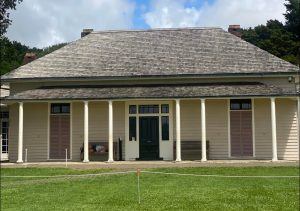
Te Tuwhera
He Tikanga hei whakatakotoranga ko te Whakaputanga o Nga Rangatiratanga o Nga Rangatira o nga Hapu o Niu Tireni (1835) me te Tiriti o Waitangi (1840)/
Ko tēnei Ture Whakahaere kua whakatūria hei whakatairanga i te whakaoranga pūtea, te manawaroa ōhanga, te whai wāhi manapori, me te rangatiratanga ā-hapori mā tētahi whatunga whakawhiti taonga ā-hoa ki te ā-hoa e hāngai ana ki te hangarau poraka (blockchain) i runga i ngā Marae.
The following is based on the principles, articles and spirit of the Proclamation Of Sovereignty signed in 1835, as well as the Treaty of Waitangi (Maori version) signed in 1840.
This Constitution has been established to promote financial liberation, economic resilience, democratic participation, and community sovereignty through a peer-to-peer blockchain-based bartering and exchange network on Marae. Tohu will be used as tokens for exchange, and given value by the marae as transactions take place.
The importance of collective stewardship, decentralised participation, and the empowerment of local communities through transparent and accountable systems is recognised.
The network is founded on principles of Kotahitanga, Tino Rangatiratanga, Mana Motu Hake o nga Hapu me te Wairua o te Ao Maori. Respect will be afforded to mutual aid, fairness, self-determination, distributed governance, technological sovereignty, and respect for cultural identity and community autonomy.
Each participating Marae shall act as an autonomous community node within the wider network, contributing to the strength, security, and continuity of the decentralised exchange ecosystem.
Kawa 1 — Ko te Ingoa (Name)
1.1 The name of the organisation shall be:
Peer-to-Peer Marae Economic Liberation Network – (Name of the Marae goes here).
1.2 The organisation may operate under a registered trading name as approved by democratic vote of its membership.
Kawa 2 — Te Whainga (Purpose and Objectives)
2.1 The organisation exists to:
- Promote financial liberation and economic independence for participating communities.
- Establish and maintain a decentralised peer-to-peer blockchain bartering and exchange system, using tohu and given value depending on the exchange.
- Enable communities to exchange goods, services, labour, resources, and value without dependence on centralised financial institutions.
- Foster democratic participation in all organisational and technological governance processes.
- Support local resilience, food sovereignty, cultural continuity, and cooperative economics.
- Protect community autonomy through decentralised infrastructure ownership.
- Encourage ethical technological development that serves human and community wellbeing.
- Provide educational opportunities regarding decentralised systems, digital sovereignty, blockchain infrastructure, and cooperative economics.
Kawa 3 — Core Principles
3.1 The organisation shall operate according to the following principles:
- Haputanga – Decentralisation and democratic participation.
- Maramatanga – Transparency and accountability.
- Koha – Mutual benefit and reciprocity.
- Whanau, Hapu, Iwi – Respect for cultural identity and indigenous sovereignty.
- Nga Rauemi – Technological accessibility and economic fairness.
- Kaitiakitanga – Community stewardship.
- Ngakau Pono – Privacy and digital autonomy and non-exploitation.
Kawa 4 — Membership
4.1 Membership may be granted to:
- Marae communities and or co-operative groups, who may be local producers and services providers. A committee must be elected of the following people with the following roles:
Chairperson – to uphold the vision and purposes of the Marae
Secretary – to support the chairperson through minutes and recording of major decisions
Treasurer – to manage transactions and provide balances reports to the committee
Administrator – to learn the technology and hold the marae private key for implementing the system. To learn the backup system for all transactions.
Auditor – to audit and monitor systems and roles, including the general membership, to ensure integrity in their functions. Holds no voting or proposal power. However, has the authority to stand down any person/s found engaging in fraud, exploitation, sabotage or actions contrary to the purposes of the organisation, until resolved by the membership.
4.2 All members shall agree to uphold this Constitution.
4.3 Membership rights include:
- Participation in voting processes.
- Proposal submission rights.
- Access to network services.
- Participation in barter exchange systems.
- Access to educational resources.
Kawa 5 — Democratic Governance
5.1 The organisation shall operate according to democratic principles.
5.2 Major decisions shall be determined through transparent voting systems.
5.3 Each registered Marae node shall hold one collective governance vote.
5.4 Individual members may participate in local decision-making processes within their respective community node structures.
5.5 Governance proposals may include:
- Constitutional amendments.
- Infrastructure development proposals.
- Network rule modifications.
- Resource allocation decisions.
- Security protocols.
- Membership standards.
5.6 Voting procedures shall be transparent, verifiable, and accessible.
Kawa 6 — Marae Node Structure
6.1 Each participating Marae shall operate as an independent network node.
6.2 Each Marae node shall maintain:
- A dedicated physical location for blockchain infrastructure.
- Continuous and stable internet connectivity.
- Secure hardware infrastructure.
- Local governance participation structures.
6.3 The designated node location shall be formally assigned and protected for long-term operational continuity.
6.4 Marae nodes shall contribute to:
- Network validation.
- Distributed ledger maintenance.
- Transaction verification.
- Community access support.
- Local education and participation.
6.5 No central authority shall possess unilateral control over all network infrastructure. All administrative rights will participate in a Node Commissioning Handover where the central authority will be excluded from setting up the public key to the decentralised network infrastructure.
Kawa 7 — Blockchain and Bartering System
7.1 The organisation shall establish and maintain a decentralised blockchain-based exchange system.
7.2 The system may facilitate:
- Peer-to-peer barter transactions.
- Community credit systems.
- Service exchanges and resource sharing.
- Cooperative production tracking.
- Local exchange accounting.
7.3 The network shall prioritise transparency, security, privacy protection, and resilience.
7.4 Smart contracts may be implemented where democratically approved.
7.5 The organisation shall seek to minimise speculative exploitation and prioritise real economic exchange value.
7.6 The network shall not operate primarily for financial speculation.
Kawa 8 — Data Sovereignty and Privacy
8.1 Communities and individuals retain ownership over their data.
8.2 Personal data collection shall be minimised.
8.3 Surveillance-oriented practices are prohibited.
8.4 Data sharing between nodes shall require transparent protocols and community consent.
8.5 Sensitive information shall be protected using strong security standards.
Kawa 9 — Ethical Standards
9.1 The organisation shall prohibit:
- Fraudulent conduct.
- Exploitative financial practices.
- Manipulation of democratic processes.
- Discrimination.
- Corruption.
- Technological sabotage.
9.2 Members shall act in good faith toward the wellbeing of participating communities.
Kawa 10 — Infrastructure and Maintenance
10.1 The organisation shall encourage distributed ownership of infrastructure.
10.2 Each node shall maintain operational standards necessary for network reliability.
10.3 Technical maintenance responsibilities shall be shared through cooperative support systems.
10.4 Emergency recovery protocols shall be established to preserve network continuity.
Kawa 11 — Education and Community Development
11.1 The organisation shall provide educational initiatives concerning:
- Blockchain systems.
- Decentralised governance.
- Cooperative economics.
- Digital literacy.
- Cybersecurity awareness.
- Community resilience.
11.2 Training shall be made accessible to participating communities.
Kawa 12 — Funding and Resources
12.1 The organisation may receive support through:
- Membership contributions.
- Cooperative funding models.
- Donations.
- Grants.
- Community resource pooling.
12.2 No funding arrangement shall compromise the decentralised integrity or democratic governance of the organisation.
Kawa 13 — Tribunal Conflict Resolution
13.1 Disputes shall first seek resolution through mediation.
13.2 Local disputes should first be addressed within the relevant community node.
13.3 Appeals may be brought before a democratically selected conflict resolution council.
13.4 Restorative approaches shall be prioritised where appropriate.
Kawa 14 — Amendments
14.1 This Constitution may be amended through democratic vote.
14.2 Proposed amendments must be distributed to all registered nodes before voting.
14.3 Constitutional amendments shall require a supermajority approval threshold determined by the membership.
Kawa 15 — Dissolution
15.1 The organisation may only be dissolved through a supermajority democratic vote.
15.2 Upon dissolution, remaining infrastructure and resources shall be distributed according to democratically approved community benefit principles.
15.3 No individual member may privately appropriate collective infrastructure assets for personal gain upon dissolution.
Kawa 16 — Foundational Declaration
16.1 This organisation affirms that resilient communities require decentralised participation, shared stewardship, and equitable access to systems of exchange.
16.2 The organisation exists to strengthen community autonomy through ethical technology, democratic cooperation, and collective economic participation.
16.3 The network recognises that local communities possess the right to participate in systems that support dignity, self-determination, and mutual prosperity.
Ratification
This Constitution shall take effect upon ratification by the founding membership and participating community nodes.
Signed on Behalf of the Founding Members and Participating Marae Nodes: